





Description
Saint-Mathurin Church, Listed as a Historic Monument
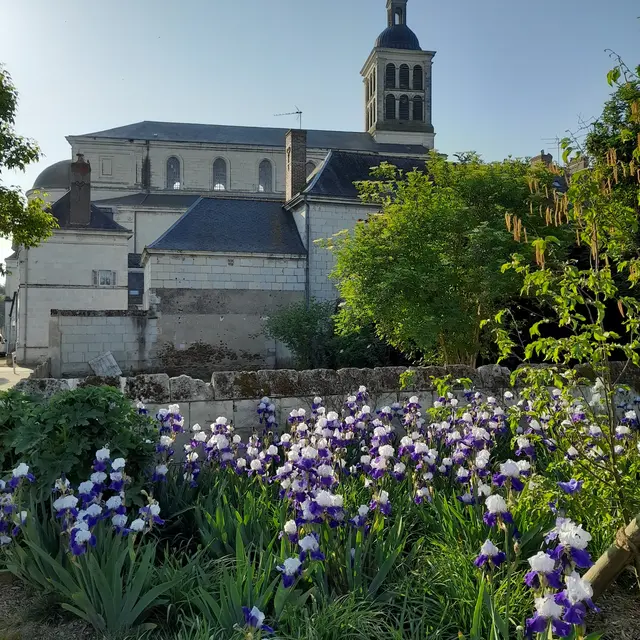
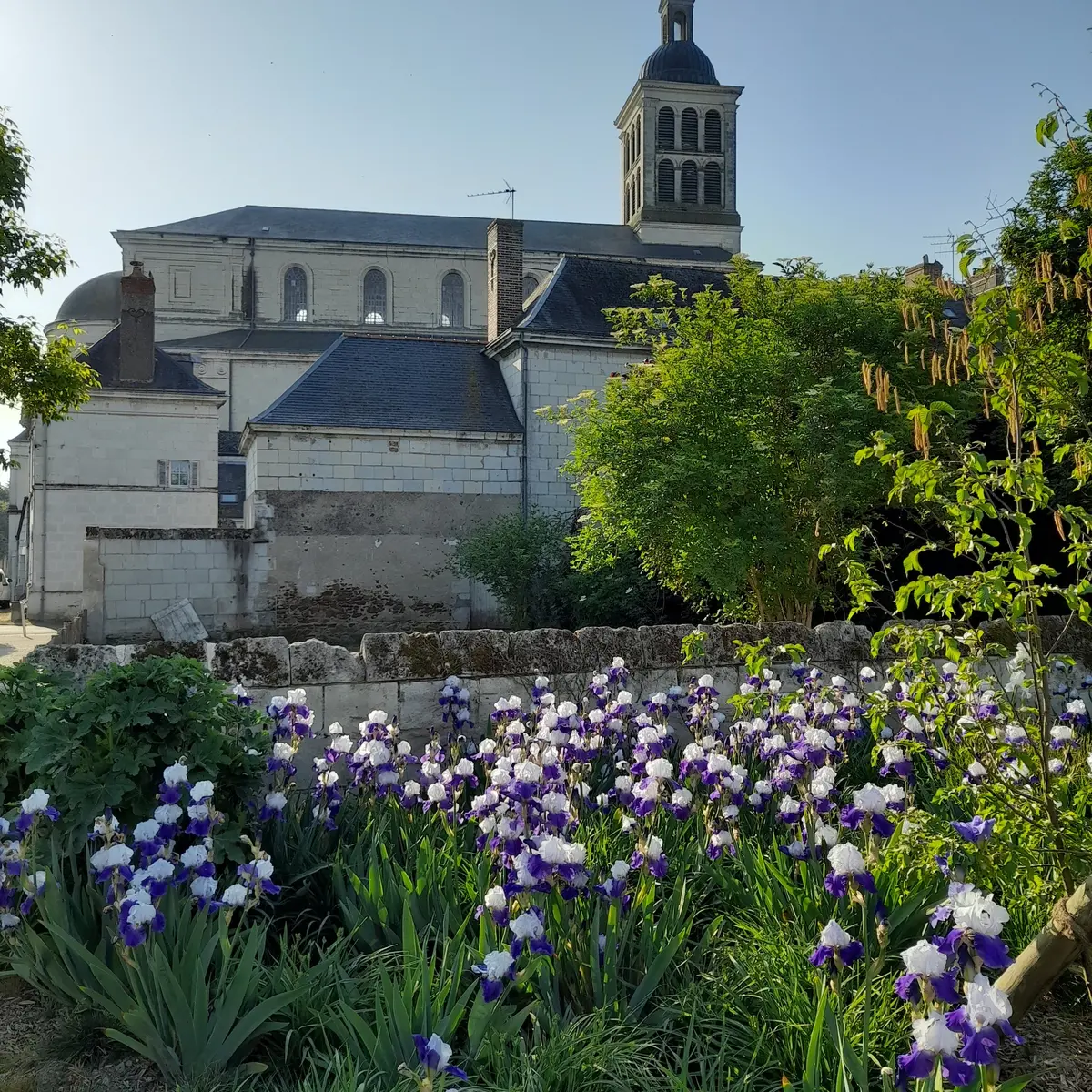
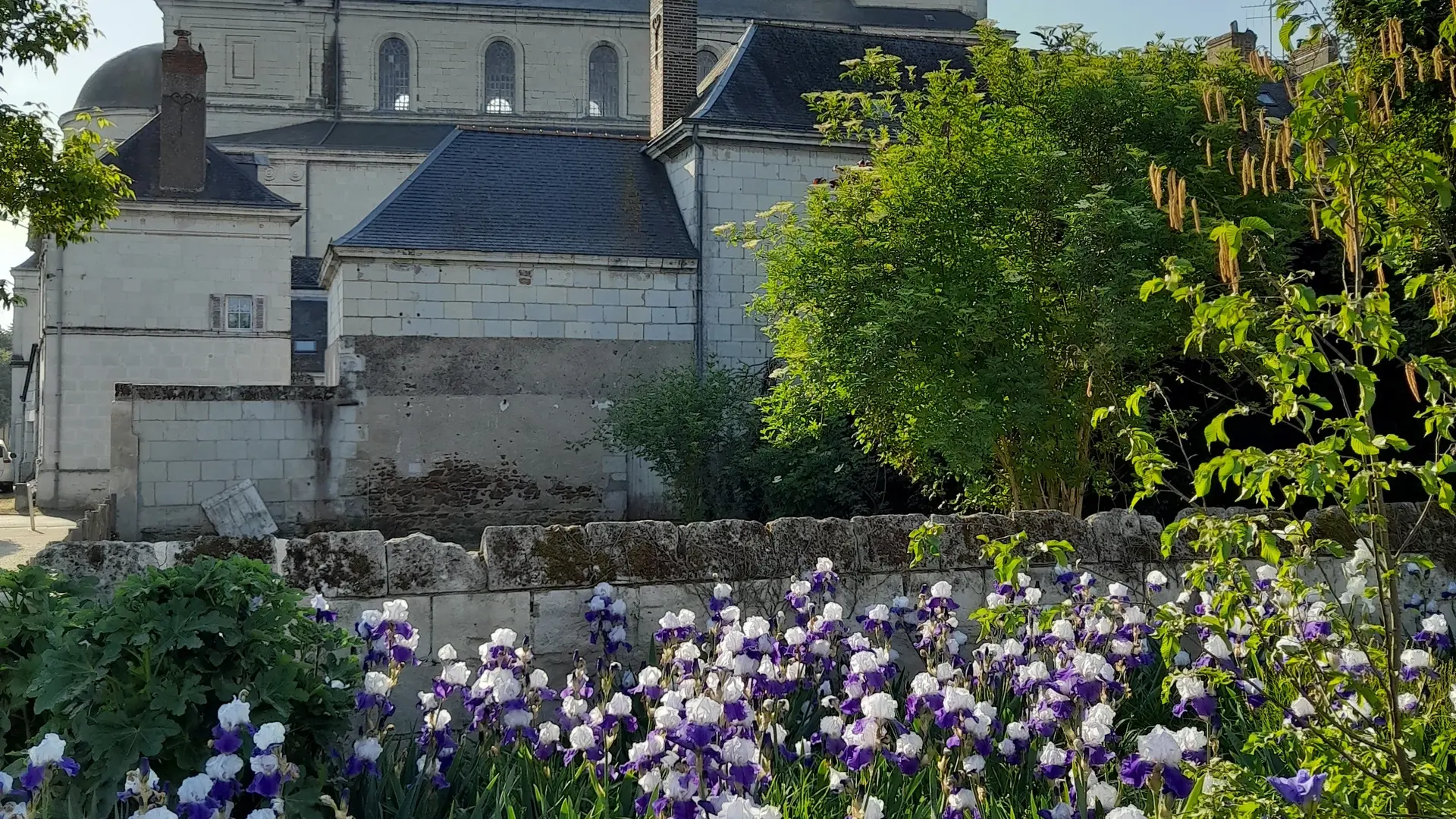
Due to flooding along the Loire River, Saint-Mathurin was founded relatively late. In 1399, a chapel was established there, belonging to the parish of Saint-Rémy-la-Varenne, located on the south bank. The chapel was rebuilt in 1548 and subsequently remodeled. It stood on the site of the current church square and encroached on the levee. This chapel was demolished in 1856. In the 19th century, the entire valley experienced prosperity based on agriculture and river shipping. The population of Saint-Mathurin reached 2,800 by the middle of the century. Consequently, it became necessary to build a new, larger church. The building would need to accommodate 2,000 people. The design by Angers-based architect Jacques-Louis François-Villers was selected. It is a vast neoclassical building (inspired by Greco-Roman architecture), whose facade, facing the river, is preceded by a rectangular plaza. Construction began in August 1840 and continued, with some difficulty, until 1846. The main challenge of the project was to securely anchor a building constructed on a site with a very steep slope, part of which had been filled in with earth. Almost immediately, the church had to be reinforced. Major restoration work was carried out in 1992. The Church of Saint-Mathurin is one of François-Villers’s major religious works and one of the most imposing neoclassical churches built on the levee in the 19th century (the others are Saint-Clément-des-Levées, La Ménitré, and La Bohalle).
The bell tower is topped by a dome, which in turn is surmounted by a lantern shaped like a small temple. The entire structure is built of fine tuffeau cut stone.
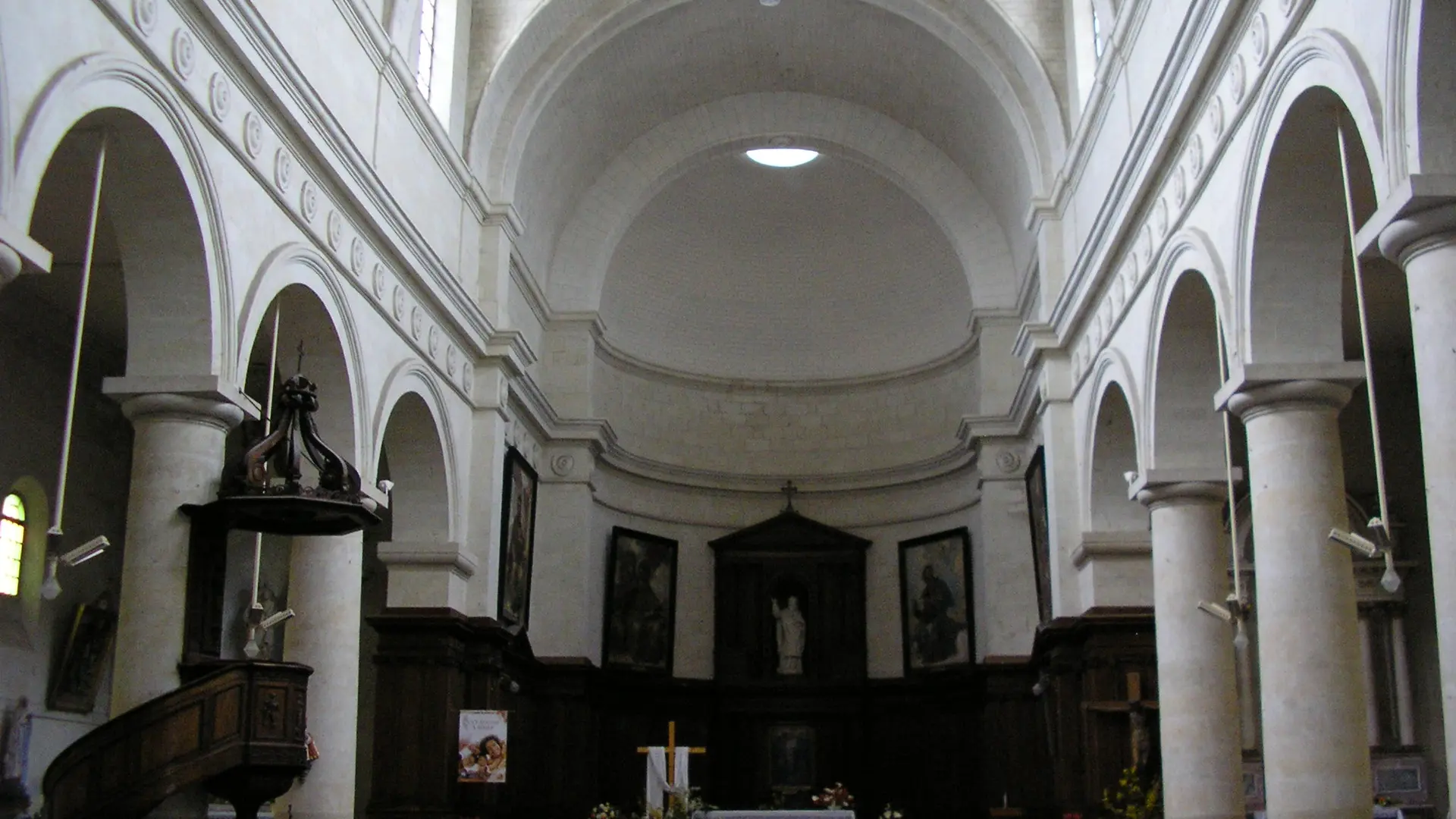
The interior conveys a sense of monumentality and majesty. The nave is 27.60 m long. The choir features an oculus that provides overhead lighting: it is thus bathed in semi-darkness, contrasting with the bright light of the nave and contributing to the theatricality of the liturgy.
The high-quality furnishings date from the same period as the church. This woodwork, like all the church’s furnishings, was crafted in 1846 by the Royal School of Arts and Crafts in Angers.
The church is home to several interesting works of art. See the interpretive panels inside the church.
In the choir:
- The Four Evangelists, by Alphonse Monchablon (1835–1907), winner of the Grand Prix de Rome in 1863. Each Evangelist is depicted with his symbol: the lion for Saint Mark, the bull for Saint Luke, the angel for Saint Matthew, and the eagle for Saint John.
- The Holy Family, a 19th-century copy after Murillo.
- The 16th-century wooden crucifix comes from the old church.
In the chapel to the right of the entrance:
Paintings:
- The Adoration of the Shepherds, by Alphonse Lavaudan (1796–1857), a painting donated in 1850 by Mr. and Mrs. Diard.
- The Adoration of the Magi, a 19th-century canvas
Statues: This chapel features several ancient statues, originating either from the old church or from the Marsaulaye Chapel. Notable among them are a 17th-century Saint Sebastian carved from tuffeau stone and a 16th-century Saint Roch carved from polychrome tuffeau. The latter comes from the Marsaulaye Chapel. The saint is dressed as a pilgrim to Santiago de Compostela. On his leg, he bears a bubonic plague sore being tended to by an angel. Saints Roch and Sebastian were once invoked for protection against the plague.
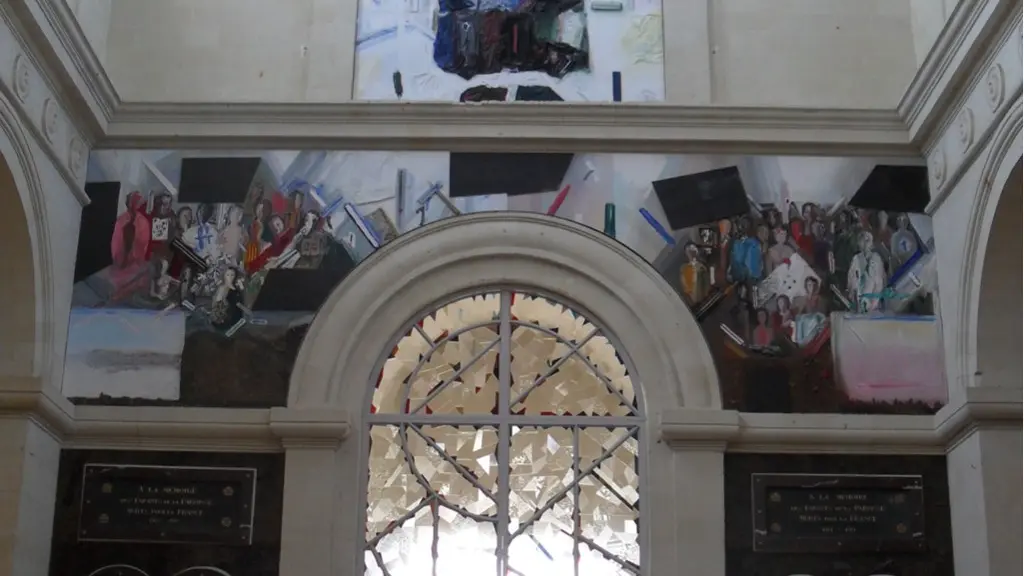
The Gate of Peace, designed by the Catalan artist Josep Grau-Garriga (1929–2011), was installed in 2012. The artist wished for his adopted town to benefit from one of his creations. He chose the church, for which he began designing the Gate of Peace in 2009. This monumental work combines mixed media (stained glass, painting) and incorporates the parish war memorial into a vast symbolic composition. (See the interpretive panels inside the church.)
Services
Free car park
Car park
Stroller-accessible
Openings
Monday
09:00 - 18:00
Tuesday
09:00 - 18:00
Wednesday
09:00 - 18:00
Thursday
09:00 - 18:00
Friday
09:00 - 18:00
Saturday
09:00 - 18:00
Sunday
09:00 - 18:00
Monday
09:00 - 18:00
Tuesday
09:00 - 18:00
Wednesday
09:00 - 18:00
Thursday
09:00 - 18:00
Friday
09:00 - 18:00
Saturday
09:00 - 18:00
Sunday
09:00 - 18:00
Location
Plan interactif : 1 lieux répertoriés.
- Lieu sans nom
Spoken languages
Spoken languages